

¿Está mi tienda preparada para invertir en una máquina multifuncional?
David Fischer 01.27.2022
El mecanizado multitarea está ganando popularidad en la industria manufacturera, y con razón, ya que estas máquinas están llenas de potencial, promesas y factores de rentabilidad que van más allá de las categorías de máquinas tradicionales.
Entonces, ¿cómo determinar si este tipo de máquina herramienta es la compra adecuada para su taller? ¿Qué beneficios puede esperar del uso de una máquina herramienta multifuncional? ¿Y en quién debería confiar para obtener respuestas a sus preguntas a medida que surjan? Analicemos estas y otras cuestiones.
El mecanizado multitarea está ganando popularidad en la industria manufacturera, y con razón, ya que estas máquinas están llenas de potencial, promesas y factores de rentabilidad que van más allá de las categorías de máquinas tradicionales.
Entonces, ¿cómo determinar si este tipo de máquina herramienta es la compra adecuada para su taller? ¿Qué beneficios puede esperar del uso de una máquina herramienta multifuncional? ¿Y en quién debería confiar para obtener respuestas a sus preguntas a medida que surjan? Analicemos estas y otras cuestiones.
¿Quién puede ayudar a mi taller a avanzar en la implementación de una máquina herramienta multitarea? La importancia de la distribución OEM.
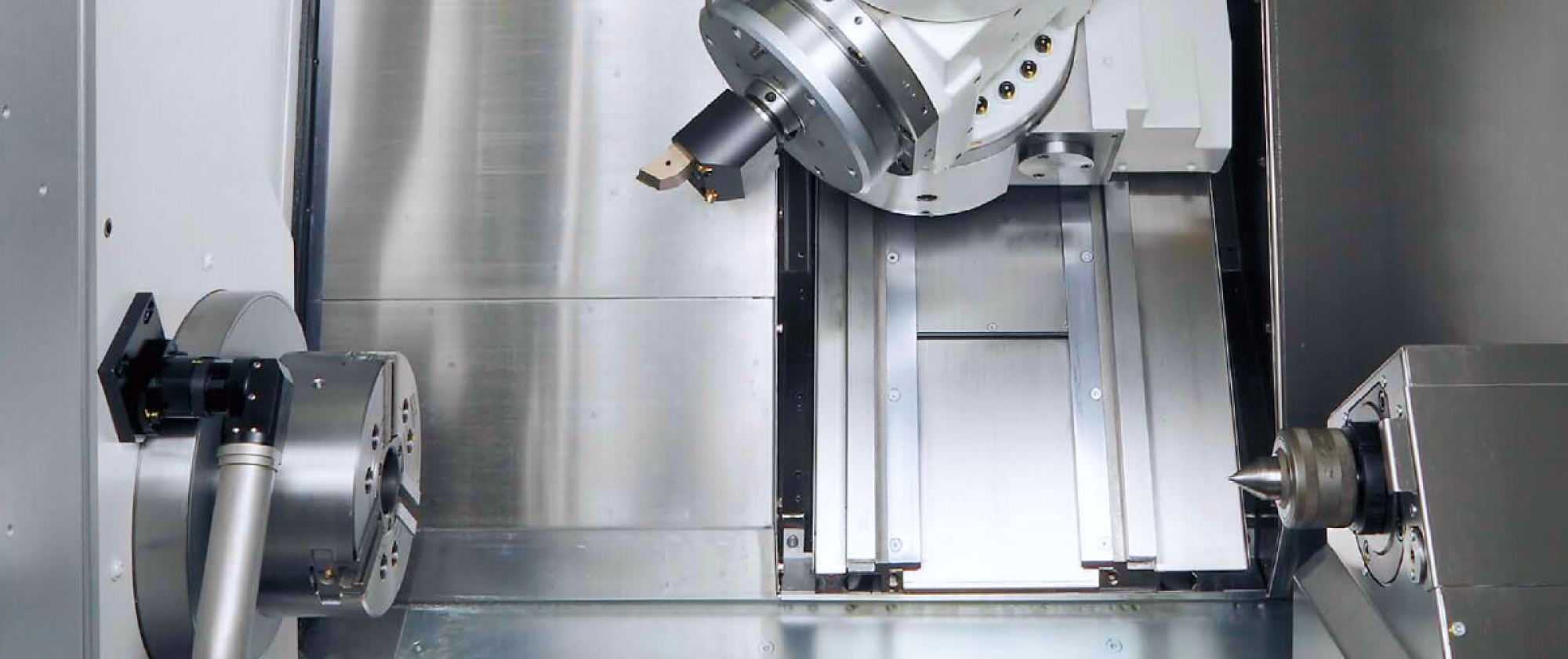
En Okuma, creemos que es fundamental contar con un asesor experto durante el proceso de toma de decisiones y compra, que suele ser complejo. Si bien los precios de entrada de las máquinas (como la MULTUS B250 II , que forma parte de la línea de productos Affordable Excellence ) son muy atractivos, su taller debería acudir a un distribuidor local para que le ayude a elegir la máquina herramienta más adecuada para su aplicación y sus objetivos.
Si le resulta difícil visualizar cómo las ventajas de la multitarea se aplican a su caso particular, nuestros distribuidores están dispuestos a realizar un estudio de tiempos o incluso una demostración en vivo para mostrarle el potencial que ofrece esta categoría de máquinas. El tiempo dedicado a un análisis más profundo con expertos de confianza le ayudará a comprender mejor cómo una máquina herramienta multitarea puede resultar beneficiosa y, sobre todo, rentable para su taller.
Además, si busca adquirir una máquina multitarea por primera vez, queremos garantizar su éxito. Ya sea que compre una o varias máquinas, su distribuidor local de Okuma le brindará capacitación personalizada en sus instalaciones para asegurar que usted y su equipo se sientan cómodos programando, operando y manteniendo su nueva adquisición.
Continuemos la conversación sobre la multitarea.
Si desea obtener más información sobre las máquinas herramienta multitarea, nos encantaría acompañarle en este proceso. Póngase en contacto con su distribuidor local o regístrese para hablar directamente con nuestros expertos a través de On-Demand con Okuma .
How can I calculate the ROI of a multitasking machine?
Conducting a time study with an existing part can reveal the time and cost savings of a multitasking machine. Identify and select a recurring part or part family that currently requires multiple compatible operations and has enough production volume or strategic importance to make process improvement meaningful. A time study should focus on the actual workflow, not an idealized version of it.
Suggested evaluation questions:
- Does this part require both turning and milling work?
- How many setups and fixtures are required today?
- How often is the part moved between machines?
- Where does the part wait in the current route?
- Which tasks require an operator at each stage?
- Is the part a repeat job, a growing opportunity, or a process bottleneck?
- Could automation support material loading or unloading for this application?
What quality requirements must be maintained throughout the process?
How can automation strengthen a multitasking investment?
Automation can increase the value of a multitasking process when the application, material flow, part handling, and operating requirements are compatible with unattended or reduced-intervention production. These solutions should be evaluated as part of the complete process.
When a part process is stable and compatible with automated material handling, a multitasking machine can be evaluated alongside bar feeders, loading and unloading systems, or robotics. The right automation approach depends on the part, the process, material flow, inspection needs, and desired operating model.
How can Okuma and a local distributor validate the opportunity?
An Okuma multitasking investment should be validated through a part-specific application review, time study, or live demonstration. Local distributors bring application-level knowledge to individual shops, while Okuma provides the machine-tool and control expertise of a single-source OEM.
A distributor-led evaluation should examine:
- The part drawing and completed part requirements
- Current routing, setups, and handling steps
- Programming strategy
- Tooling and work-holding
- Compatible multitasking operations
- Control requirements
- Automation options, if relevant
- A validated time study or live demonstration using a representative application
A complex finished part depends on machine capability, multi-axis access, programming strategy, tooling, work-holding, and control performance working together.
How can automation strengthen a multitasking investment?
Automation can increase the value of a multitasking process when the application, material flow, part handling, and operating requirements are compatible with unattended or reduced-intervention production. These solutions should be evaluated as part of the complete process.
When a part process is stable and compatible with automated material handling, a multitasking machine can be evaluated alongside bar feeders, loading and unloading systems, or robotics. The right automation approach depends on the part, the process, material flow, inspection needs, and desired operating model.
How can Okuma and a local distributor validate the opportunity?
An Okuma multitasking investment should be validated through a part-specific application review, time study, or live demonstration. Local distributors bring application-level knowledge to individual shops, while Okuma provides the machine-tool and control expertise of a single-source OEM.
A distributor-led evaluation should examine:
- The part drawing and completed part requirements
- Current routing, setups, and handling steps
- Programming strategy
- Tooling and work-holding
- Compatible multitasking operations
- Control requirements
- Automation options, if relevant
- A validated time study or live demonstration using a representative application
A complex finished part depends on machine capability, multi-axis access, programming strategy, tooling, work-holding, and control performance working together.
MULTITASKING FAQS
Ofrecemos una variedad de formas para que te mantengas informado sobre nuestros eventos y recibas actualizaciones generales de Okuma. Completa el formulario a continuación para indicarnos el tipo de información que te gustaría recibir.
