
How To Plan CNC Automation: Five Questions That Determine the Right Solution
Simon Schneider 08.01.2025
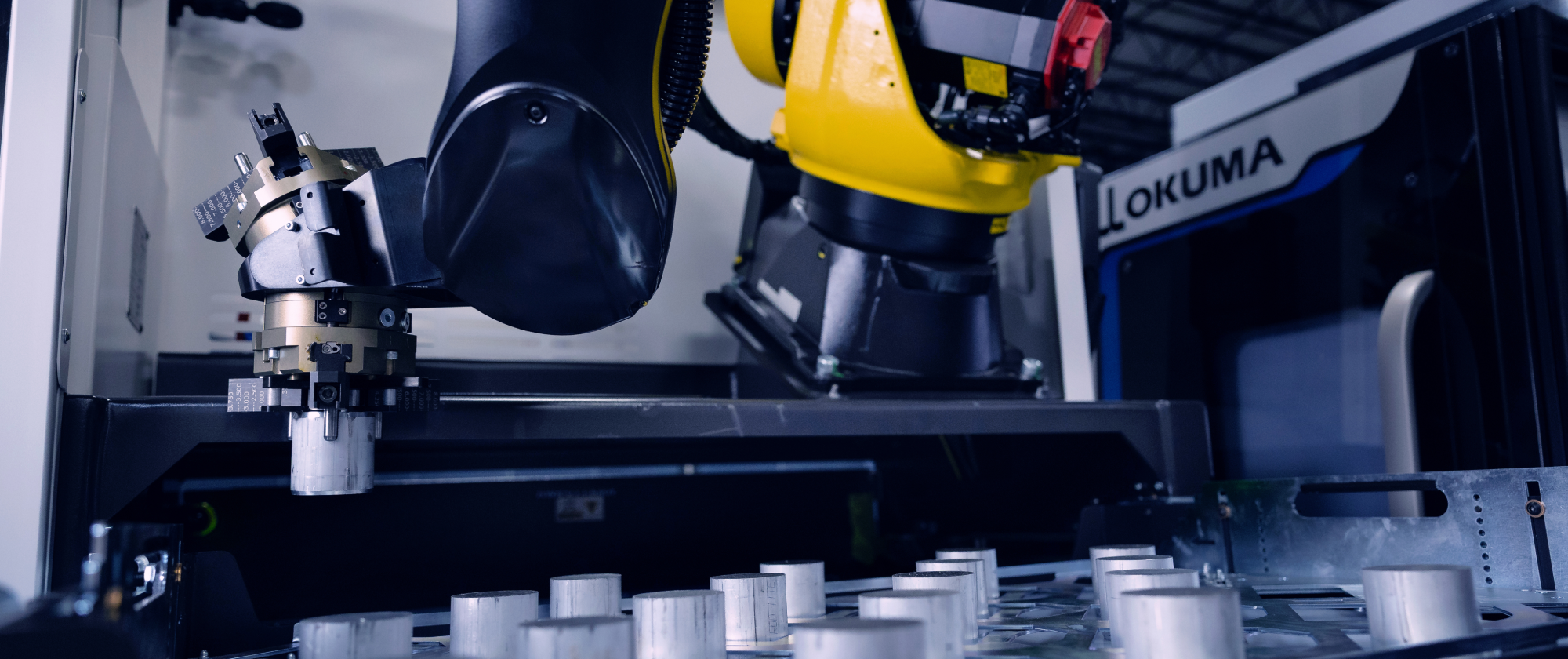
Every automation decision is more informed, strategic, and straightforward with Okuma Factory Automation as your partner and provider.
CNC automation moves fast, whether you’re using a new bar feeder, your tenth cobot, or a trusted automatic pallet changer that’s seen a few different machine-tool pairings over time. For growing shops, automation is the way forward: a necessary solution to production challenges that’s becoming more affordable and accessible.
Across industries, automation adoption is increasing for two reasons:
- Manufacturing production continues to grow. In April 2025, U.S. manufacturing output increased 1.2% year-over-year, highlighting greater demand for automotive components, aerospace parts, computer and electronic elements, and fabricated metal products.1
- By 2030, the manufacturing sector could face a shortage of 1.9 million skilled workers.2 Retirement is the biggest hurdle — workers with irreplaceable knowledge and experience are leaving the industry faster than the next generation can be trained. We’re starting to see this now. By the end of 2025, 22% of “existing skilled manufacturing workers will be retiring.”3
But faster operations and increased productivity don’t matter unless you’re moving in the right direction. The right CNC automation strategy starts with identifying the outcomes a shop needs to achieve. From there, part requirements, production volume, available floor space, and the right integration partner determine the best approach.
Okuma Factory Automation has partnered with many shop leaders and operators to provide standard and customized solutions. Here are the top five questions to ask when planning the right automation solution for your shop:
WHEN TO INVOLVE A CNC AUTOMATION PARTNER?
WHAT’S YOUR PRODUCTION GOAL?
HOW MUCH FLOOR SPACE DOES CNC AUTOMATION REQUIRE?
WHICH SOLUTIONS ARE BEST FOR PARTS AND PRODUCTION VOLUMES?
WHAT DOES OKUMA FACTORY AUTOMATION PROVIDE?
WHEN TO INVOLVE A CNC AUTOMATION PARTNER?
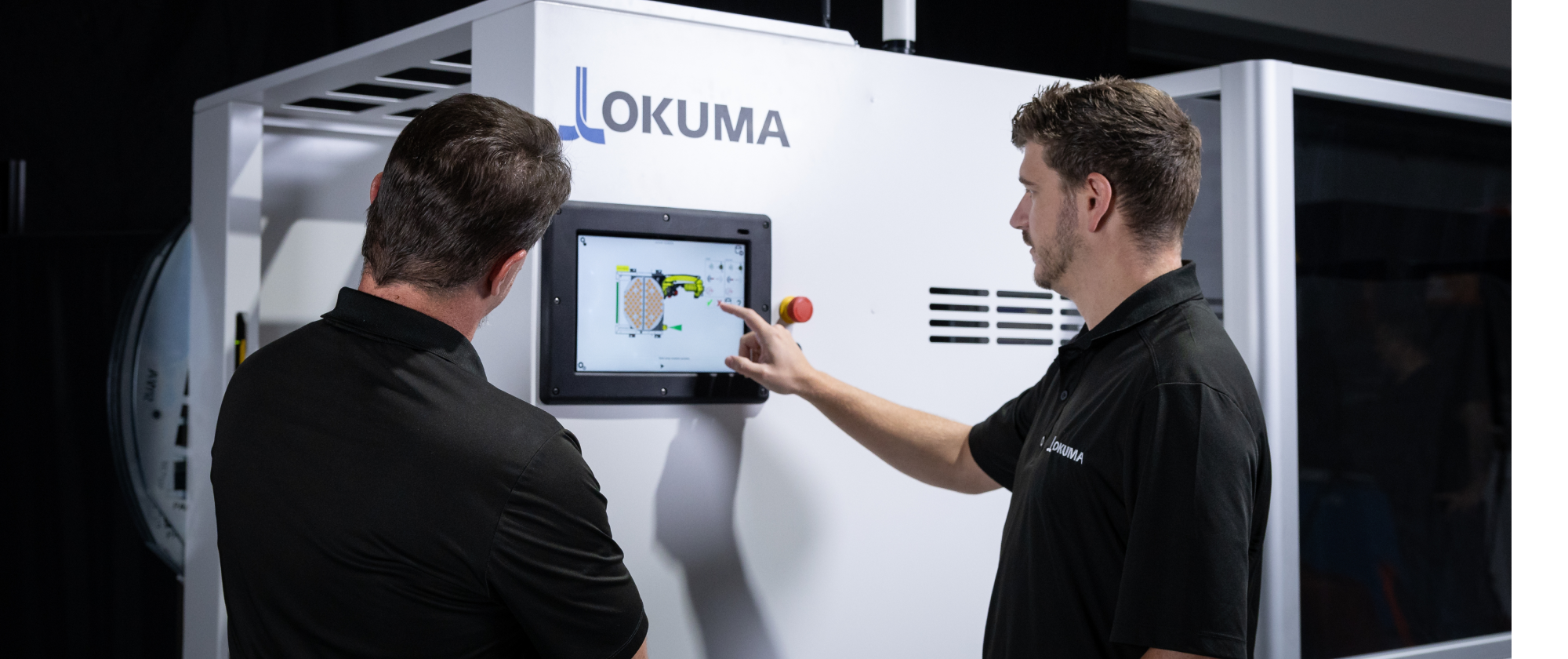
An automation partner should become involved before you commit to a layout, system, or equipment decision to provide expertise around your shop’s engineering and production needs.
For Okuma Factory Automation, it’s never too early. We help you turn operational challenges into standard or customized solutions, helping you understand the full scope of how our automation offerings fit within your plan: software and hardware, training and service, integration, and 24/7/365 support.
WHAT’S YOUR PRODUCTION GOAL?
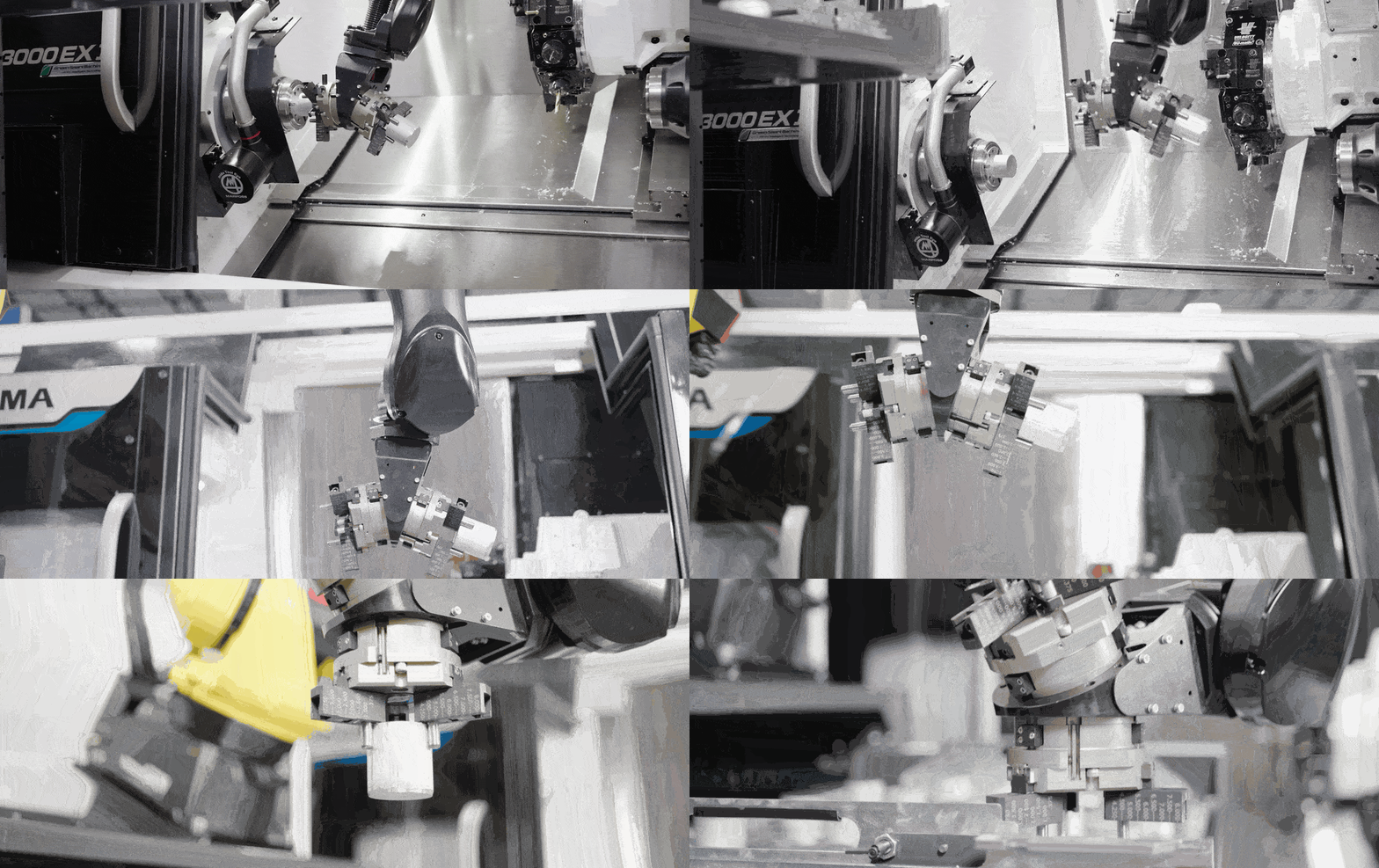
A successful automation plan adopts the right systems at the right time for the right reasons. The right plan aligns with your production strategy, considers your unique challenges, and makes an immediate difference in your day-to-day operations.
When shops spec parts before they know how they’ll make them, and how automation can help produce at scale, they often leverage the wrong system at the wrong time, or underestimate the resources needed for the job. But with an automation plan, you can:
- Define specific goals beforehand
- Integrate automation to have maximum impact on ROI
- Match system features and capabilities to real needs
- Avoid investing in a solution that simply isn’t right
You shouldn’t spec parts without an automation strategy in place — that’s like restoring a car without all the right parts or fishing without bait. However, we believe in automation for all shops, all jobs, and all budgets.
Getting started is simple. At Okuma Factory Automation, we’ll make the plan with you and then carry out each step.
HOW MUCH FLOOR SPACE DOES CNC AUTOMATION REQUIRE?
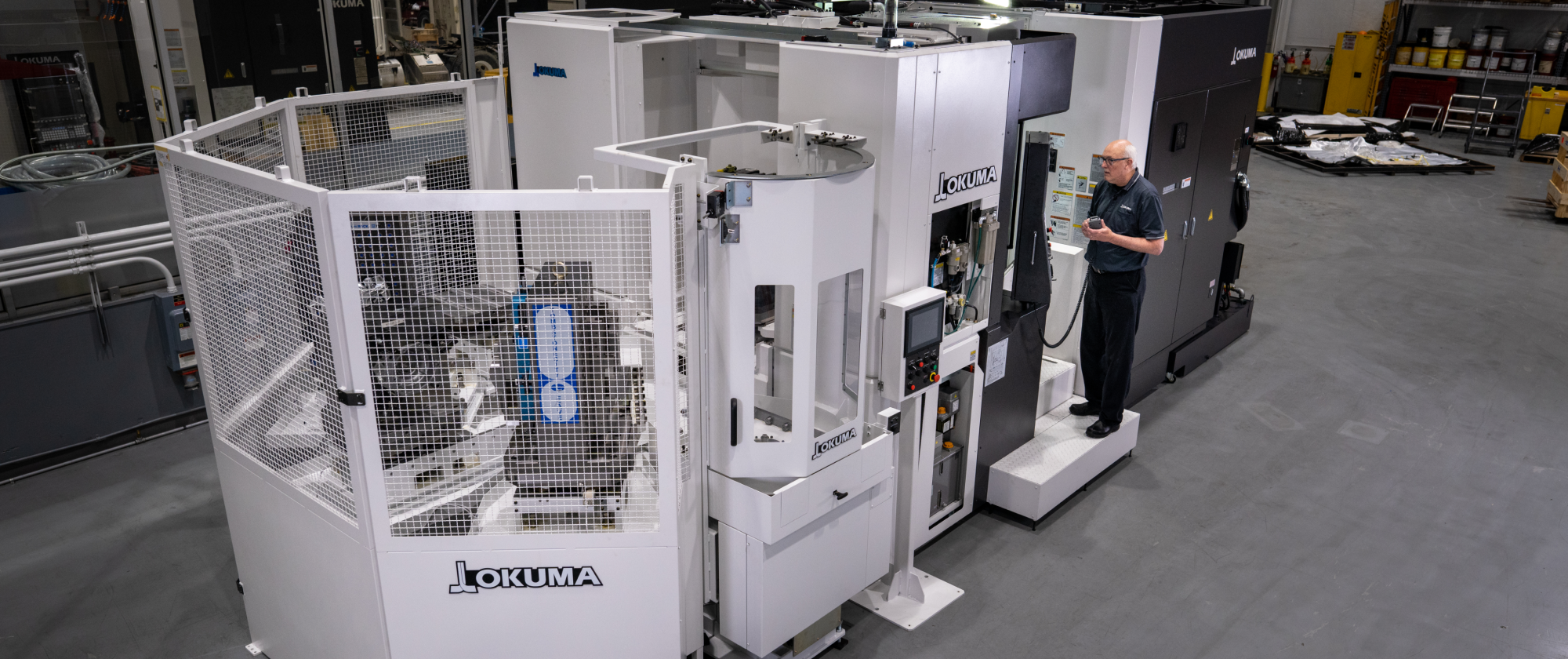
Your CNC automation strategy should plan beyond the footprint of machines and automation equipment to support safe, efficient movement of machines, people, materials, and forklifts throughout staging areas and workstations.
Instead of navigating workflow inefficiencies, we’ll help you work through them. By visiting your site and walking your floor(s), we can see your current flow of parts, machine layouts, and floor space opportunities. From there, we will make recommendations as part of your automation plan to optimize every inch of your floor, so space doesn’t limit the types of jobs you can take on, or your ability to integrate automation into your operations.
“Fitting your business” is twofold. Not only should you consider automation capabilities that are right for your operations. You should analyze the size of every automation system you wish to implement.
WHICH SOLUTIONS ARE BEST FOR PARTS AND PRODUCTION VOLUMES?
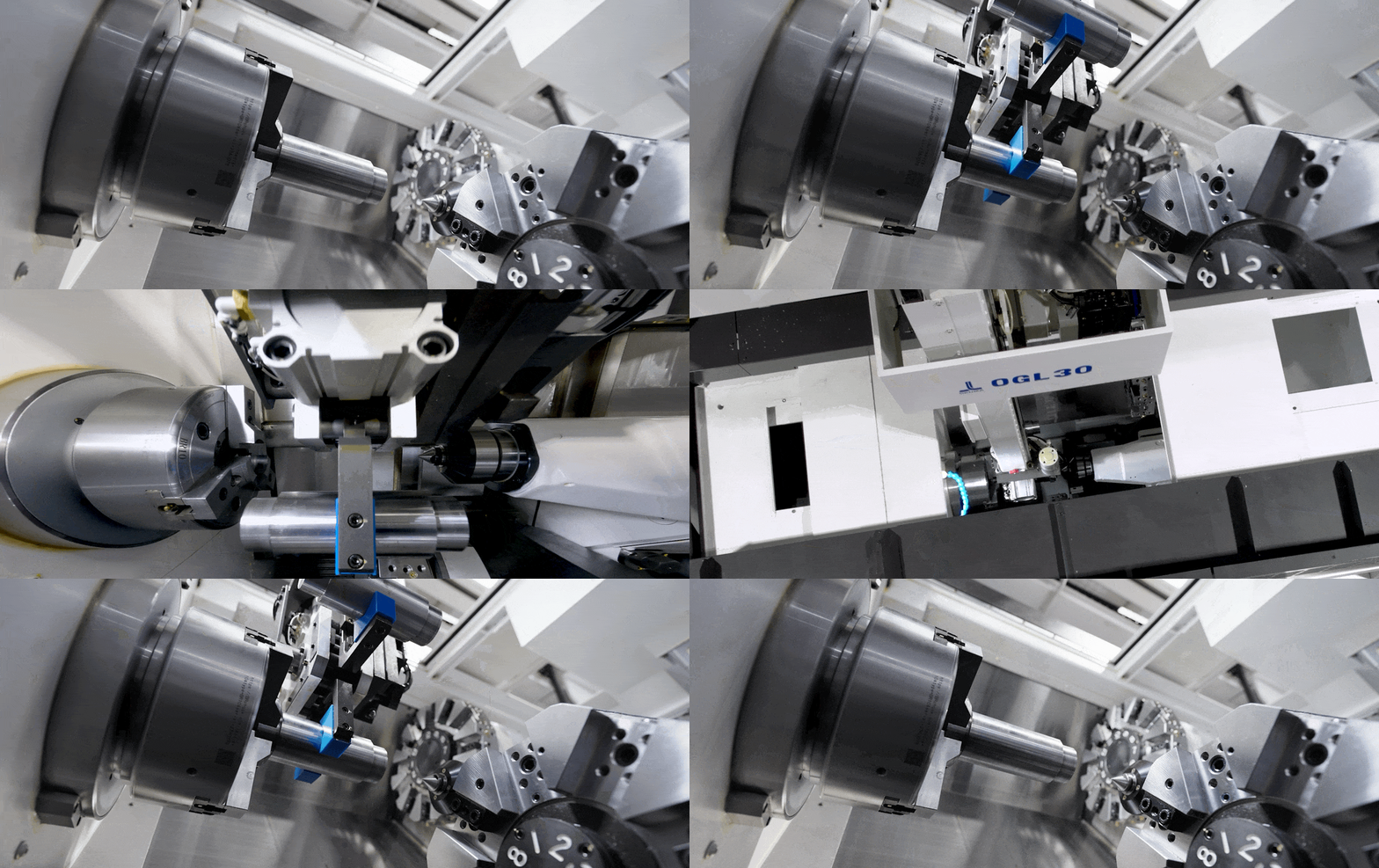
Automation is an investment, so you want to integrate it around your shop to deliver the highest returns. And when you fully understand your part process — prep, setups, loading, cycle times, tool changes, unloading — you can identify where it needs to go.
Automation Considerations and Questions To Ask
Part volume
Is this a repeat, high-volume production need or a changing mix of parts?
Part handling
What must be loaded, unloaded, staged, or transferred?
Production flexibility
Does the shop need a dedicated workflow or greater adaptability across part families?
Unattended operation
How long should the system run before an operator needs to intervene?
Machine and workflow fit
How will automation support the full machining process — not just one task?
Consider two of our solutions — the Okuma Gantry Loader and the Okuma Robot Loader — for a range of volume and mix operations:
- Okuma Gantry Loader: An efficient, space-saving automation system that loads metal stock material into your machine for processing and unloads finished parts.
- Okuma Robot Loader: An automated tool management system for low-volume, high-mix operations requiring faster tool access, greater consistency, and shorter lead times.
For enterprise manufacturers and job shops alike, Okuma Factory Automation can help you avoid mismatches and trial and error for immediate benefits and predictable returns on investment.
WHAT DOES OKUMA FACTORY AUTOMATION PROVIDE?
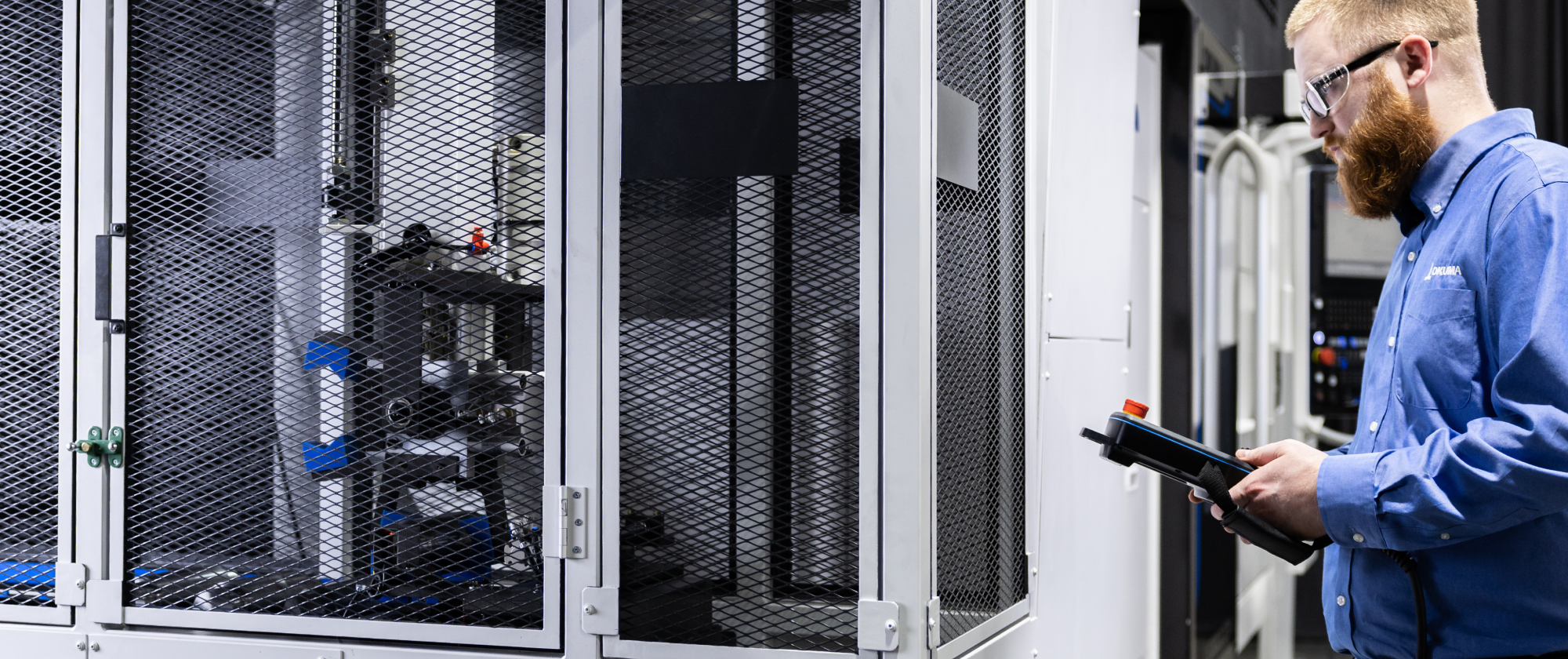
Okuma Factory Automation helps shops assess their operation, identify the right automation plan, engineer and integrate a solution, and support the system through installation, training, service, and ongoing partnership.
It’s how we learn about your business goals, capacities, and constraints to understand your needs and advise specific solutions. We customize any hardware or software you need, using an approach that’s both consultative and focused on engineering to determine where automation fits best in your operations:
- Advising: Our team visits your shop to learn what you do and how we can help. Firsthand observation allows us to assess workflows and equipment conditions to provide on-site adjustments. We can also uncover hidden inefficiencies and missed automation opportunities as we walk your floor and hear from your operators, engineers, and other stakeholders.
- Integration: Then we combine our findings with your production needs and non-negotiables to introduce automation pairings that are precise, realistic, and perfect for your shop. We don’t guess or suggest based on assumptions. We consider your machines, budget, existing contracts, and capacity to take on new business to help you determine the right solution.
From consultation to engineering, Okuma Factory Automation is your single source for automation solutions that fit your shop, not the other way around.
References
1. Trading Economics. “United States Manufacturing Production.” Accessed 6 June 2025. https://tradingeconomics.com/united-states/manufacturing-production.
2. Magill, Kate. “Manufacturing could be short 1.9M workers if the talent gap isn’t fixed.” Supply Chain Dive. 16 April 2024. https://www.supplychaindive.com/news/manufacturing-labor-shortage-2033-deloitte-mi-report-2024/713326/.
3. Pucciarelli, Michael S. “Labor Shortages in the Manufacturing Sector.” Hill, Barth & King LLC. 15 November 2022. https://hbkcpa.com/insights/labor-shortages-in-the-manufacturing-sector/.
We offer a variety of ways for you to stay informed about our events, and to receive general Okuma updates. Fill out the form below to let us know the type of information you'd like to receive.
