
A New Era in Automation: How Unattended Machining Redefines What’s Possible
Simon Schneider 01.08.2026
It’s time to rethink what automation + human collaboration looks like.
Every technology has its “quantum leap” moment. Black-and-white TV exploded into color in the ’50s. The internet sparked a digital revolution in the ’90s. And today, breakthroughs in automation are asking us to reconsider what’s possible inside the machine bay.
These advances come at a critical moment for our industry and manufacturing in general. Demand for parts is rising, and stubborn labor gaps are only widening. According to industry studies, many shops are operating with 10-20% fewer skilled machinists than they need, all while quoting pressure and delivery expectations continue to climb. For job shops left in the middle, a turning point has arrived.
We believe that within every challenge there also lies an opportunity — and for automation, we believe the biggest opportunity is in rethinking the status quo.
On the shop floor, cycle time tells us how long it takes to cut parts from start to finish, and this will vary based on the size, design, complexity, and machinability. Shorter cycles mean more parts per shift, but speed alone doesn’t tell the whole story. Instead of how fast, a better question to ask is: how long is your machine actually cutting parts and not sitting idle? That’s why we look beyond pure cycle time and focus on what really matters to shop performance. For our industry to weather the challenges we all face, that means extending the time machines can run productively without needing an operator standing in front of them, or manually and mindlessly loading stock and unloading finished parts.
This is where the idea of unattended machining comes in. Lathes, multitaskers, machining centers, and 5-axis machines continue producing parts while skilled people are freed to manage setups, programming, inspections, and problem-solving around the shop. We’re thinking about maximizing human potential in addition to optimizing technical productivity. Because when you think beyond speed, you open up new possibilities for creative freedom.
The Mindset Shift: From Machine Time to Creative Time
Most conversations around automation have traditionally focused on two familiar challenges: addressing staffing shortages and machining parts faster. These are both important, of course, but that way of thinking will only take you so far. On its own, faster cycle time doesn’t increase output if machines still wait on people. True productivity comes from improving the percentage of time a machine is actually cutting metal, and how consistently equipment stays in production over a full shift or weekend run.
Automation systems do so much more than solve productivity problems; they can create new opportunities from the ground up. That’s the kind of vision we bring to every part of our design process, and it’s why we want to move the conversation around automation toward practical unattended machining. Run jobs longer with fewer interruptions. Get more predictable results.
Instead of “How can I use automation to keep my machines running?” this new mindset instead asks, “How can we keep making parts while my people are doing higher-value work?”
It’s a simple shift of perspective, but it’s one that recognizes the true merit of automation as a tool for stabilizing throughput, increasing uptime, and making skilled labor go further, not replacing it.
Human + Machine Collaboration: The Okuma Factory Automation Story
We’ve always been driven by the simple belief that technology performs best when it puts people first. Automation is no different. When people and machines are able to collaborate in meaningful ways, possibilities are endless — and measurable.
To bring this kind of collaboration to life, we’ve spent countless hours observing human workflows:
- Where does production stall during a shift?
- How often are machines idle, waiting on an operator who is tied up elsewhere?
- Which tasks require skilled judgement? Which ones shouldn’t?
- How can we minimize repetition and maximize more rewarding creative freedom?
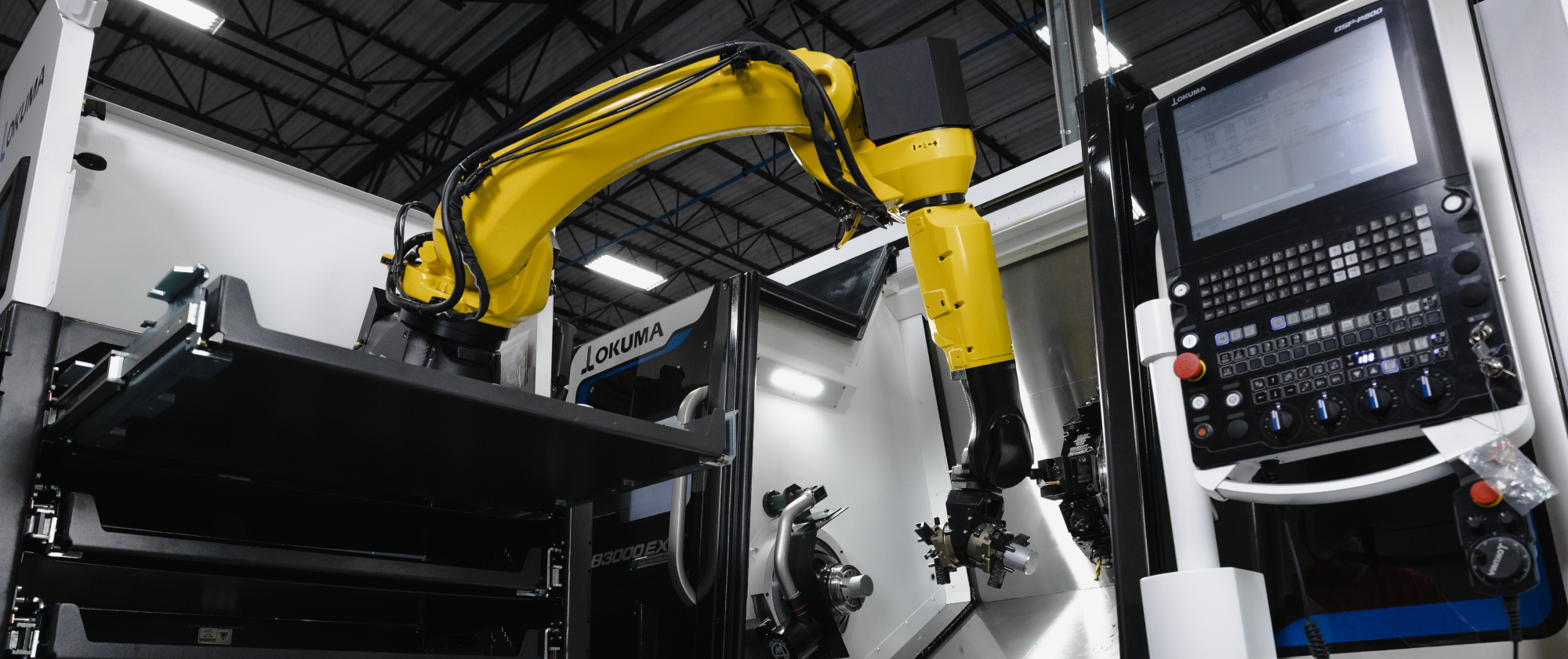
We’ve shifted to think in terms of unattended cycle time, and our approach to automation shows it. Okuma Factory Automation helps shops extend spindle uptime without the need for custom engineering on every install or retrofit. Operators can set up a job, confirm first-part quality, and move on with the added confidence of knowing that the machine will keep running.
Customers commonly see gains from standard and customized solutions, such as:
- ROI within six to nine months, depending on the solution.
- Lights out production during second and weekend shifts within days of installation.
- More consistent part quality and increased production due to reduced manual intervention.
From the operators moving on to other tasks after setting up APCs (Automatic Pallet Changers) to running lights out shifts, to the engineers using data to fine-tune processes and maximize spindle uptime, our technologies and mindset shift are making human + machine collaboration more meaningful.
More Than a Machine Manufacturer
We are, and have always been, a technology company at heart. But that technology only matters when chips are flying and tolerances remain tight.
For us, that means designing automation around and for humans and real shop constraints, not just productivity targets. If you’ve ever worked with an Okuma, you’ve experienced this firsthand. If you haven’t, we’ll show you. Our machining ecosystem is built with full-scale continuity and support in mind from the start, so you can hit the ground running. Our automation solutions embody that same mindset — when machines take care of the work, people are free to focus on setups, process improvements, and quality. These are what move work and shops forward.
We want you to spend less time learning and more time doing, and our standard and custom automation solutions make that happen, unlocking new efficiencies, creativity, and confidence across your shop floor.
The Outcome: What Happens When Machines Handle the Business
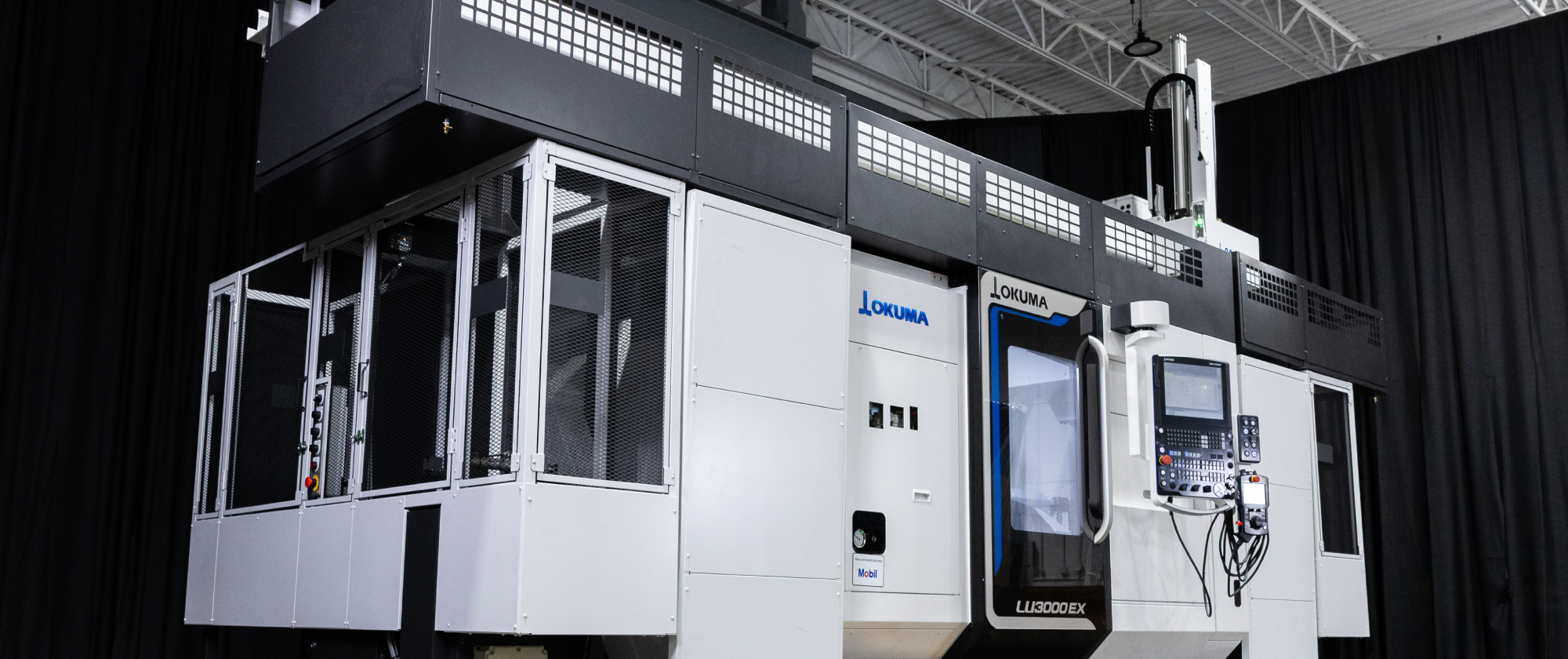
What could you accomplish with unattended cycle time? Many of our customers already know.
In job shops and production environments around the world, Okuma-empowered teams are:
- Increasing output without adding headcount.
- Reducing overtime and burnout while meeting delivery windows.
- Running consistent parts overnight and on weekends without compromising quality or confidence.
- Improving ROI by keeping spindles turning and cutting instead of waiting.
Machines and people work smarter together, making manufacturing more predictable, less stressful, and a more satisfying and rewarding career. That’s the human transformation behind automation, and we’re proud to be the partner of choice for leaders daring to think bigger and better for what their teams can accomplish.
Answering the Call To Think Differently
Sometimes it doesn’t just take a new technology. Sometimes it’s a new mindset that can change the way we work and create.
For too long, automation has been seen as a replacement for people. The reality today is that the most successful shops use automation to protect and elevate their workforce, stabilize production expectations, and stay competitive in a tight labor market.
That’s why we invite you to reimagine what your job shop could look like with Okuma Factory Automation at your side. Talk to your local distributor and learn more about how standard, scalable solutions from Okuma Factory Automation can fit into your shop.
We offer a variety of ways for you to stay informed about our events, and to receive general Okuma updates. Fill out the form below to let us know the type of information you'd like to receive.
